
Rangi Kipa
AOTEAROA ART FAIR | Booth 33
30th Apr –
1st May
2026
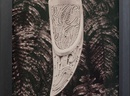
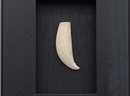
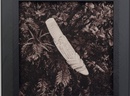
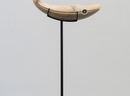
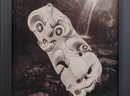
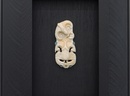
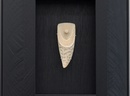
Installation.
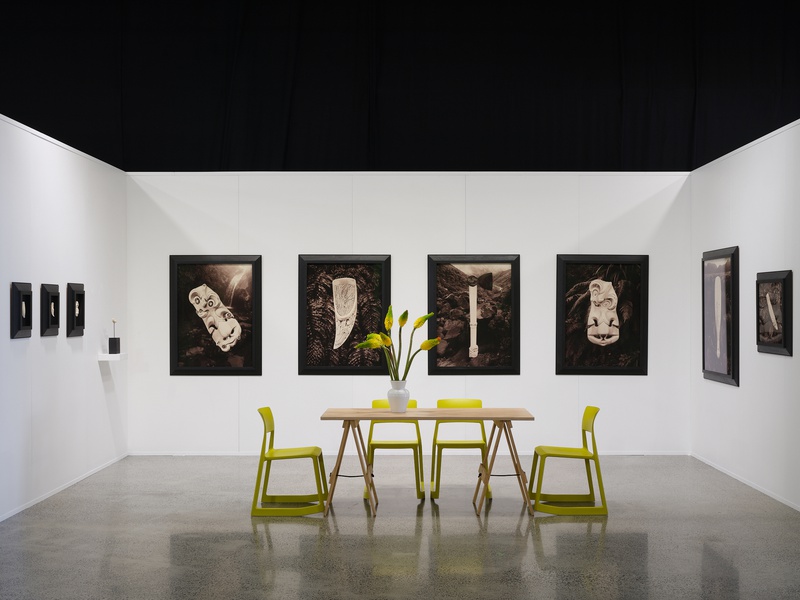
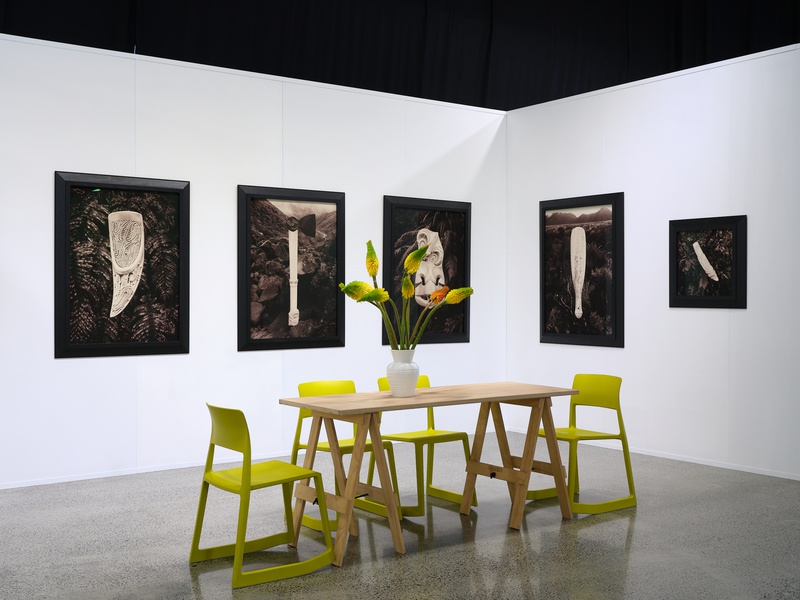
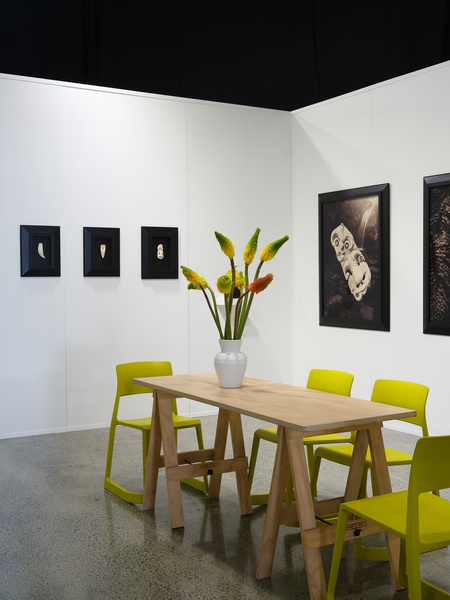
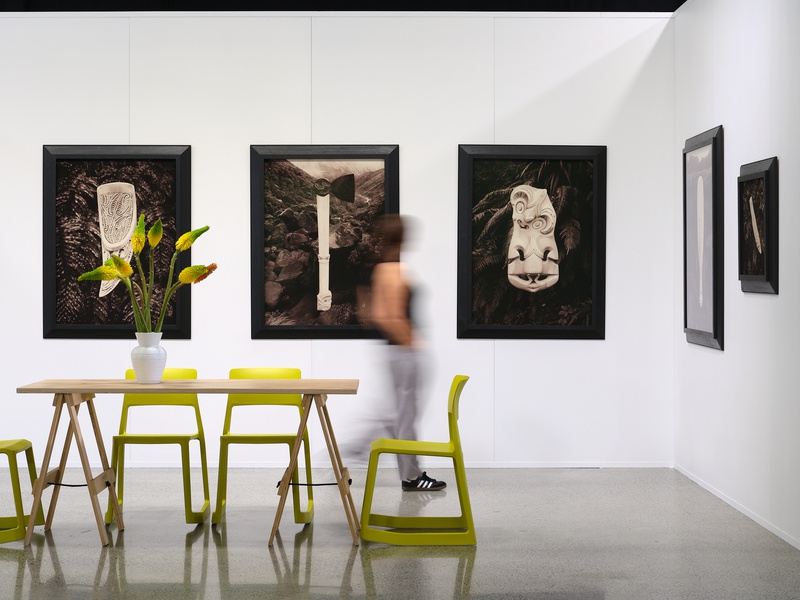
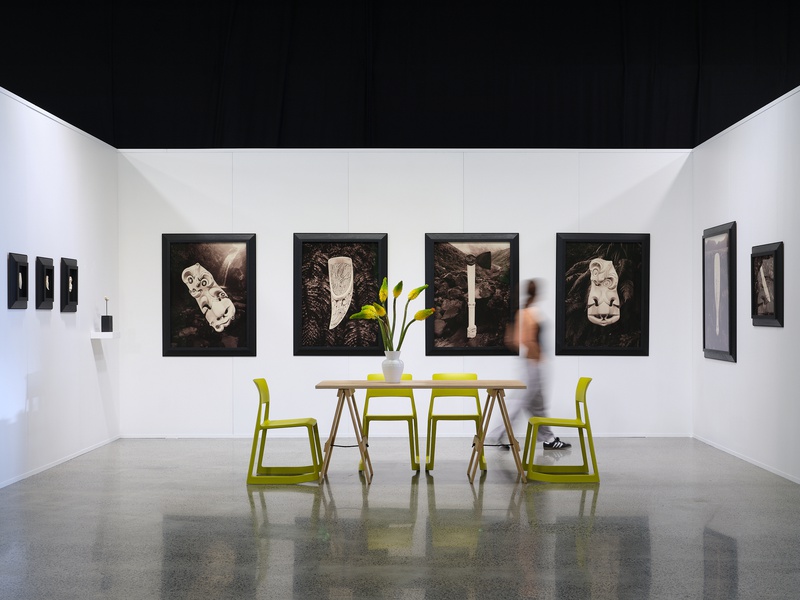
Melanie Roger Gallery returns to the 2026 Aotearoa Art Fair with two presentations - the first a solo exhibition by Rangi Kipa on Thursday and Friday.
Arts Foundation Laureate Rangi Kipa (Te Atiawa, Taranaki Iwi, Ngati Mutunga, Ngati Tama ) is a contemporary Māori artist, master carver and arts leader from Aotearoa New Zealand. His work is grounded in whakapapa, tikanga, and the traditions of whakairo and explores relationships between ancestral knowledge, contemporary identity, and the ongoing vitality of Māori material culture.
Working across a diverse range of materials - including wood, stone, metal, and marine-derived materials such as whale bone and teeth - Kipa creates works that acknowledge both ancestral practice and contemporary experience. His carvings frequently draw on traditional forms such as manaia and kōwhaiwhai rhythms, while adapting these visual languages to new sculptural and conceptual forms.
This presentation for the 2026 Aotearoa Art Fair brings together taonga carved from niho parāoa alongside a major series of photographic works, extending Rangi Kipa’s practice across object, image, and landscape. The works articulate an ongoing inquiry into form, whakapapa, and the shifting relationships between material, place, and ancestral knowledge within contemporary Māori carving practice.
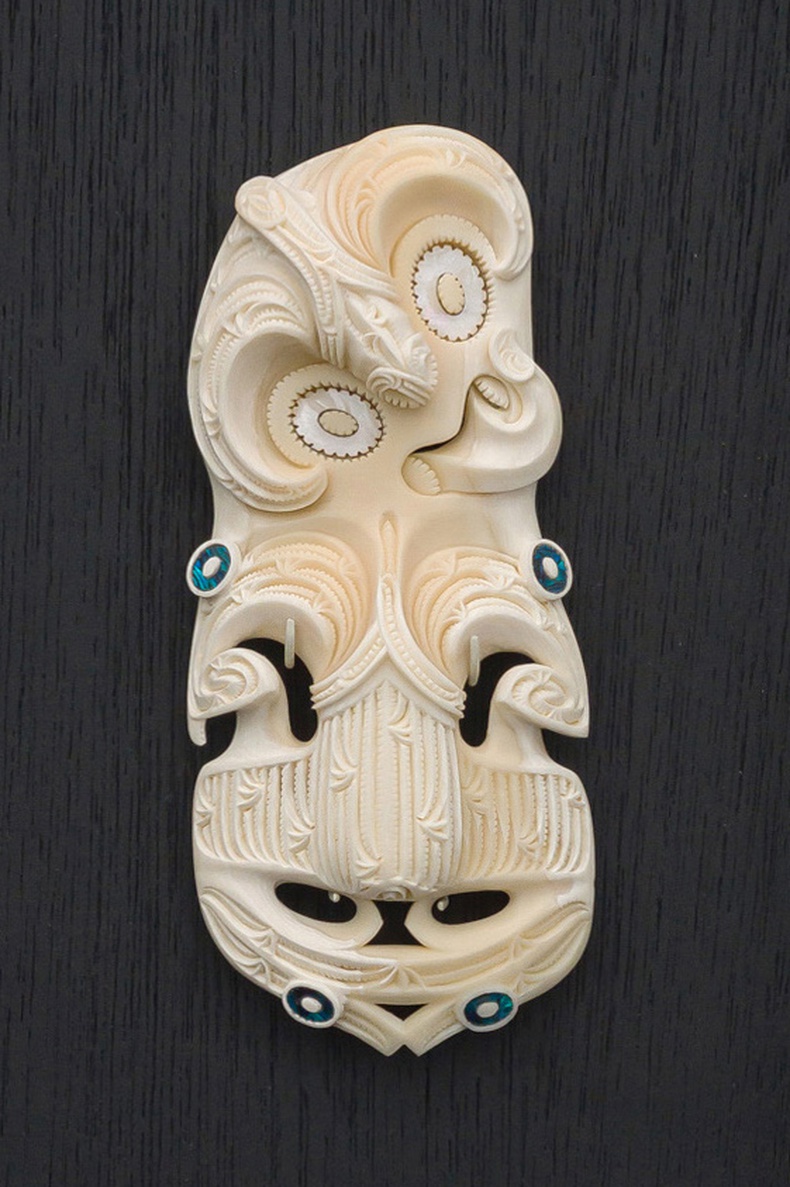
At the centre of the presentation are finely carved whale tooth works where niho parāoa is treated not only as a rare and highly valued material, but as a carrier of oceanic memory. In Kipa’s hands, the whale tooth is neither simply surface nor substrate; it is a condensed site of transformation. Subtle carving and inlay draw out latent whale-like anatomies within the material itself, evoking submerged movement, breath, and presence without resorting to literal representation. The whale is held as whakapapa—embedded, rather than depicted as such.
Works such as Tiki Āhua (2026), Tūtarakauika (2025), and Te Rei o Rauru (2025) extend the hei tiki tradition into a contemporary register, where form is refined to the point of stillness, and meaning is carried through restraint, balance, and surface intelligence. Inlays of pāua and mother-of-pearl introduce shifting optical fields that recall water, light, and depth, reinforcing the oceanic origins of the material.
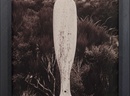
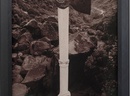
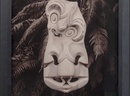
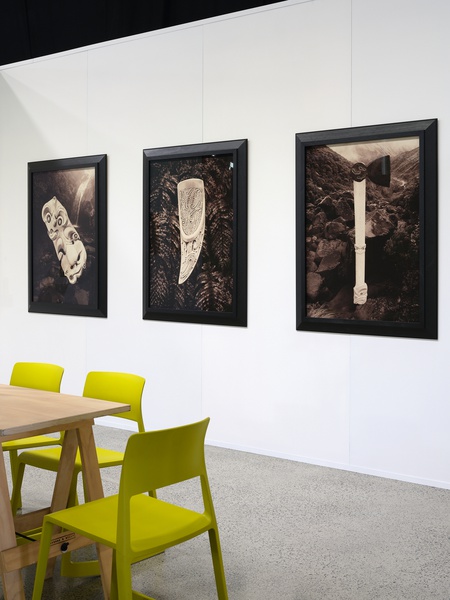
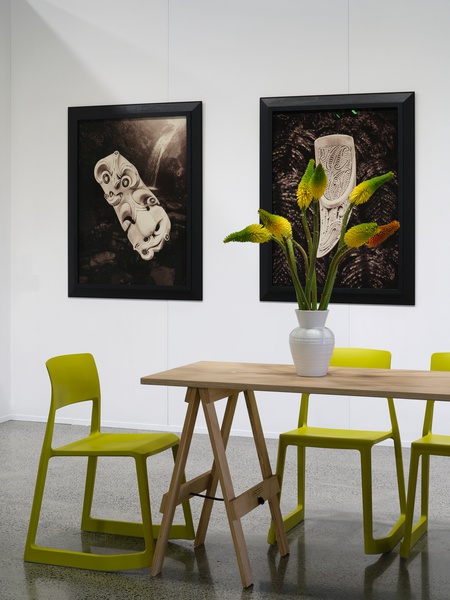
Alongside these sculptural works, a new suite of large-scale photographic pieces expands Kipa’s practice into image-making. These works combine carefully composed photographs of his carved whale bone and niho parāoa taonga with the landscapes of Taranaki, where whenua and taonga are brought into direct visual relationship. Here, the carved objects are not isolated artefacts but active presences within place—framed within environments that speak to genealogy, geology, and the enduring connections between people and land.
Produced as museum-quality archival pigment prints in editions of five, these works sit between documentation and construction. They do not simply record taonga in landscape; they stage encounters between them, where carved form and whenua enter a shared visual field. In doing so, they extend questions of whakapapa beyond objecthood into spatial and photographic composition.
Across both carving and photography, Kipa’s practice is grounded in the language and conceptual frameworks of te reo Māori, where form is inseparable from relation, and material is understood as alive with history and obligation. This presentation offers a coherent body of work that moves between mediums while remaining anchored in a sustained inquiry: how taonga carry whakapapa across time, and how contemporary practice can hold that continuity without fixing it.
Biography:
Rangi Kipa trained as a carver at the Maraeroa Carving School at Waitangirua, where he began his journey to develop the cultural and technical foundations that continue to shape his practice. His training connected him to a lineage of creative critical thinkers and to the broader revitalisation of Māori and pacific creative praxis in the twentieth century. While grounded in customary practice, Kipa’s was empowered by progressive thinkers in Maori academic and cultural sectors he was being exposed to and he embraced the enquiry and freedom of not being restricted to customary approaches and media.
Rangi Kipa has exhibited widely in Aotearoa and internationally. His work has appeared in major exhibitions including the Asia Pacific Triennial of Contemporary Art and in leading New Zealand institutions such as Te Papa Tongarewa and Auckland Art Gallery Toi o Tāmaki. His work was also included in the landmark exhibition “Toi Tū Toi Ora: Contemporary Māori Art” curated by Nigel Borell for the Auckland Art Gallery Toi o Tāmaki in 2021 , which surveyed the breadth and vitality of contemporary Māori artistic practice.
In 2025, Kipa’s work appeared on the cover of “Toi Te Mana: An Indigenous History of Māori Art”, a major publication examining the history and develop
To register interest in works and to request a PDF catalogue when available, please email the gallery: info@melanierogergallery.com
__________________________________
The fair is open to VIP and Premium Pass holders on Thursday, 30 April from 1pm, wth the opening night party taking place Thursday evening, 5pm-9pm. General entry to the fair is Friday and Saturday from 11am-6pm and on Sunday from 11am-5pm.
VIP Preview: Thursday, 30 April, 1pm – 5pm
Opening Night: Thursday, 30 April, 5pm – 9pm
Friday, 1 May, 11am – 6pm
Saturday, 2 May, 11am – 6pm
Sunday, 3 May, 11am – 5pm
For further information about the Aotearoa Art Fair and to purchase your tickets: www.artfair.co.nz