
Nikau Hindin
Bio.
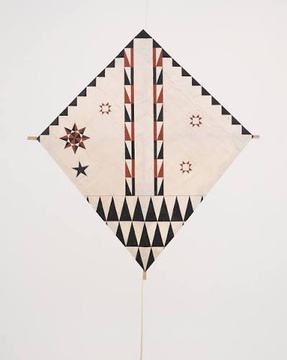
Nikau Hindin (Te Rarawa, Ngāpuhi, Ngāi Tūpoto; b. 1991, Tāmaki Makaurau Auckland) is a contemporary Māori artist, cultural practitioner, and leading exponent of aute—the traditional Māori barkcloth-making practice that had largely disappeared from Aotearoa for more than a century. Through extensive research, experimentation, and collaboration with barkcloth makers throughout Moana Oceania, Hindin has played a pivotal role in revitalising this ancestral art form and re-establishing its place within contemporary Māori culture.
Hindin combines artistic practice with cultural renewal, cultivating paper mulberry (aute), harvesting and processing barkcloth, producing natural pigments, and creating works that draw upon mātauranga Māori, celestial navigation, whakapapa, and Indigenous relationships with the environment. Her practice is informed by studies in Hawaiʻi and ongoing engagement with voyaging traditions across the Pacific.
Hindin has exhibited extensively throughout Aotearoa and internationally. Significant exhibitions include the solo exhibition Kōkōrangi ki Kōkōwai (The Dowse Art Museum touring exhibition, 2019–2022), Manu Aute: Rere Runga Hauat Season Gallery, Auckland (2022), Walls to Live Behind, Rooms to Own at Auckland Art Gallery Toi o Tāmaki (2022), the Kathmandu Triennale, Nepal (2020), the Aichi Triennale, Japan (2022), O Quilombismo at Haus der Kulturen der Welt, Berlin (2023), and the Biennale of Sydney.
In 2026, Hindin is presenting COSMOLOGIES at Te Uru Waitākere Contemporary Gallery alongside Yolŋu artist Naminapu Maymuru-White. Bringing together aute and bark painting traditions, the exhibition explores Indigenous understandings of the night sky, navigation, kinship, and ecological knowledge, creating a dialogue between Māori and Australian First Nations cosmologies.
Her work is held in significant public and private collections, including the Museum of New Zealand Te Papa Tongarewa, the Fletcher Trust Collection, and the Fondation Cartier pour l'Art Contemporain.
Alongside her artistic practice, Hindin is an educator and advocate for the transmission of traditional knowledge, mentoring a new generation of aute practitioners and contributing to the preservation and evolution of Māori artistic traditions. Her work stands at the intersection of cultural resurgence, Indigenous knowledge systems, and contemporary art, creating powerful connections between ancestral technologies and future generations.