
Derek Henderson
The Terrible Boredom of Paradise
25th Nov –
19th Dec
2026
PUBLICATION LAUNCH & EXHIBITION OPENING EVENT: Tuesday, 24 November 5.30-7.30pm
ARTIST TALK: Saturday, 28 November, 2pm
NOTE: If you are interested in joining us for these events, please just sign yourself up to our mailing list online. No RSVP is required. Limited copies of the book available - no reserves sorry. Thanks!
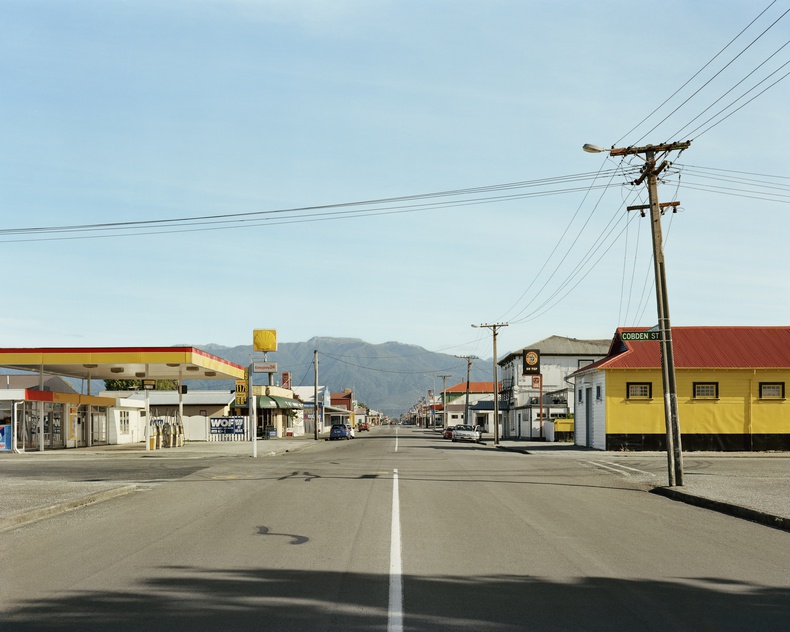
'The Terrible Boredom of Paradise' emerged from a 13,000 kilometre journey Derek Henderson made around Aotearoa during the summer of 2003–04 with a 4x5 field camera. The series traces an intensely personal geography: provincial streets, roadside motels, marae, weatherboard houses, empty intersections, parked cars, fading signage and landscapes suspended somewhere between familiarity and estrangement.
What Henderson offers is not the mythic New Zealand of tourism campaigns or nationalist nostalgia. Instead, these photographs dwell in quieter territory — in pauses, edges and intervals. The works resist spectacle. Their attention falls equally across the monumental and the overlooked, finding emotional charge in ordinary light, incidental architecture and the lingering evidence of human presence. Henderson’s images possess a profound tenderness toward the social landscape and the people who inhabit it.
The title itself, 'The Terrible Boredom of Paradise', captures this tension perfectly: paradise not as fantasy, but as something lived inside — repetitive, isolated, beautiful, melancholic and deeply familiar. Henderson photographs the country as both insider and observer, allowing boredom to become a form of looking. In these moments of stillness, subtle narratives begin to surface: histories of settlement and labour, traces of aspiration and decline, memories attached to roads, weather and distance.
Originally published in 2005 and long regarded as a landmark New Zealand photobook, 'The Terrible Boredom of Paradise' returns now in a second print run, released on the (near) twenty-year anniversary of the original publication. This new edition features new and previously unseen images alongside newly commissioned writing by Chris Corson-Scott, Joseph Adel and Hanna Scott who also wrote an essay in the first edition. It is published by Compound Press in partnership with Daylight Books.
Presented as we move into the summer months — a time when many New Zealanders are themselves traversing the country by car, retracing familiar highways and encountering the peculiar intimacy of small towns, roadside stops and long distances — Henderson’s photographs feel especially resonant. The work mirrors the experience of moving through Aotearoa at a slower pace: observing the changing light, the emptiness between destinations, and the quiet emotional texture of the landscape itself.
This exhibition and publication launch celebrates both the enduring significance of Henderson’s original project and its renewed life in print. The photographs continue to resonate because they understand landscape not as backdrop, but as a psychological and emotional condition — a place where memory, longing and observation collapse into one another. Henderson’s work asks us to slow down and look again at what we think we know: the small towns passed through without notice, the edges of roads, the fading afternoon light on a building, the uneasy beauty of everyday life. In doing so, the work reveals a portrait of Aotearoa that remains intimate, unresolved and enduring.
The exhibition will also be avabale to view by appointment where possible over our Summer break.